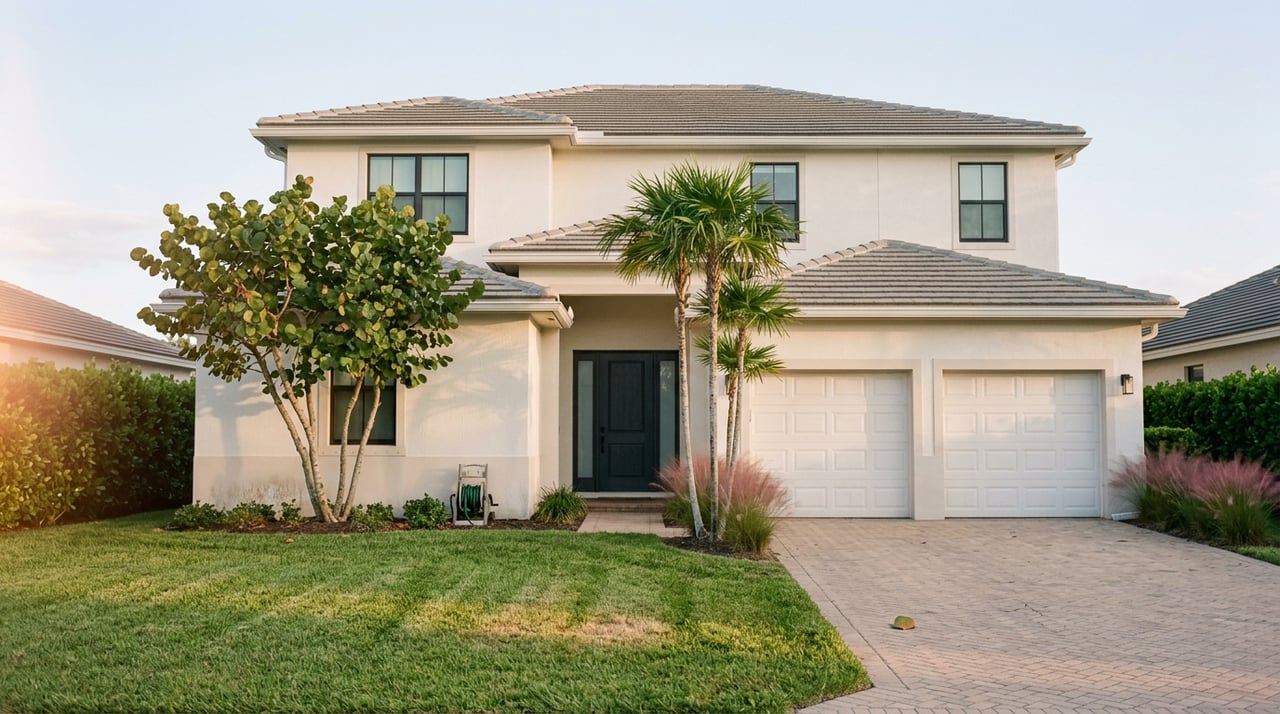
Say you get pre-approved for $450,000 and start touring homes in Tradition. Then your lender runs the numbers on the actual listing you like, and the number that comes back is smaller. Not because your income changed. Because the house came with a bill your pre-approval letter may not have accounted for.
That bill has a name: a Community Development District assessment, usually shortened to CDD fee. It shows up on the property tax statement, and it is the reason two homes priced within a few thousand dollars of each other in Port St. Lucie can cost hundreds of dollars a month apart to actually own. If you are comparing neighborhoods here using the sale price alone, you are comparing the wrong number.
The CDD Assessment
A CDD is a special-purpose government entity, authorized under Florida law. The developer doesn't fold the construction cost of roads, lakes, clubhouses, and amenity centers inside a new community into the price of the house. The Tradition Community Development District No. 1 says it uses assessments to pay off bonds, and homeowners cover that repayment through an annual non-ad valorem assessment that rides along on the property tax bill, separate from the county's own millage and separate from any HOA dues.
That structure is why a new build in Tradition can list for less than a comparable home in an older, established part of the county and still cost more to carry every month. In Tradition specifically, that annual CDD line typically runs $1,500 to $3,500, on top of whatever HOA dues the specific sub-neighborhood charges. It is not optional and it does not depend on how often you use the pool.
Where the Bond Lives and Where It Doesn't
Not every part of Port St. Lucie carries this cost, and the split falls almost exactly along the line you would expect: newer master-planned communities on the west side versus older, established neighborhoods closer to US-1.
| Area | CDD present | Typical added cost | What you get for it |
|---|---|---|---|
| Tradition (Cadence, Emery, Telaro, Vitalia, Town Park, The Estates) | Yes | $1,500 to $3,500 per year | 500 acres of lakes, 300-plus acres of parks and preserves, a walking trail, and Tradition Square as the community's event hub |
| Riverland (Valencia Cay, Valencia Grove, Valencia Walk) | Yes | HOA and CDD combined often $400 to $700 per month | The Paseo golf-cart greenway, a large Sports and Racquet Club, an Arts and Culture Center, and a dedicated Wellness Center |
| PGA Village Verano | Yes | Varies by section | Access to 54 holes at the adjacent PGA Golf Club and the Talavera Club as the social anchor |
| St. Lucie West (Kings Isle, Cascades) | Mostly no | HOA only | Mature, full-grown landscaping, walking distance to grocery stores and restaurants, and in Cascades, no CDD fee at all unlike the newer developments west of the highway |
| Torino | No | No HOA on most streets | Quarter-acre-plus lots, room for boats and RVs, a quieter, more wooded feel |
| Sandpiper Bay, River Park, Eastlake Village, Swan Park | No | No CDD | Older housing stock along the St. Lucie River corridor, resort-style pools and tennis without the newer development price tag |
The table is not a ranking. A buyer who wants a golf cart ride to a farmers market and doesn't mind budgeting for it should be looking at Tradition or Riverland. A buyer who wants to park a boat in the driveway and skip the recurring assessment entirely has a real, and different, set of options in Torino or along the river corridor. The point is that the sale price alone won't tell you which category you're in. You have to ask.
The Debt-to-Income Math Nobody Mails You Ahead of Time
Here is where the fee stops being a line item and starts changing what you can buy. Fannie Mae's Selling Guide includes property taxes and special assessments in the monthly housing expense used to calculate the debt-to-income ratio. A $2,000-a-year CDD fee adds roughly $167 a month to the housing cost your lender counts against your income, even though that $167 never touches your loan principal.
For a buyer sitting right at the edge of a debt-to-income ceiling, that difference can lower the maximum purchase price a lender will approve. Two buyers with identical income and identical down payments can qualify for different amounts depending on whether the home they're eyeing sits inside a CDD. This is the part that catches people off guard mid-contract, not before it, because most buyers don't ask about the assessment until the lender's paperwork forces the question.
If you're early enough in the search to still be comparing neighborhoods rather than negotiating a specific contract, this is worth resolving before you fall for a house. Our Port St. Lucie neighborhood guide is a reasonable starting point for seeing how these areas differ beyond the fee structure, and if you're just getting oriented as a first-time buyer, our guide to buying your first home here walks through the rest of the process.
Why the West Side Keeps Building Anyway
The CDD model exists because Port St. Lucie's growth on the west side has outpaced almost every projection made for it. When the city took control of the 3,605-acre Southern Grove site in 2018, planners figured it could take up to 30 years to sell and build out. Instead, most of that land was already spoken for less than a decade later, with employers including Amazon, FedEx, and Cheney Brothers building distribution facilities in what has become a roughly 1,200-acre jobs corridor, according to CBS12's March 2026 reporting. City leaders approved the sale of about 22.8 acres to Costco that same month for a new retail warehouse and gas station.
Retail followed the jobs. A 134,000-square-foot Lowe's broke ground at Shoppes at Southern Grove with a 2026 opening on the books, part of a broader push that Tradition's developers describe as supporting more than 38,000 new homes planned for the surrounding area, per reporting on the project. None of that infrastructure, the roads connecting it, the stormwater systems buffering it from the warehouses, gets paid for out of thin air. It gets paid for the same way Tradition's own amenities did: a bond, issued against future development, repaid by the households who move in.
This is the trade a west-side buyer is actually making. You are buying into a growth engine that is real and still accelerating, and you are financing your share of it every year on your tax bill rather than paying for it once at closing.
Reading Two Listings Side by Side
Before you compare two Port St. Lucie homes on price per square foot, run through this short list:
- Ask the listing agent directly whether the property sits inside a CDD, and if so, whether the bond has years remaining or is close to being paid off
- Request the current CDD assessment amount separately from any HOA dues, since both can apply to the same property
- Have your lender confirm whether the assessment is already reflected in your pre-approval or whether it needs to be re-run
- Compare that combined monthly number, not the sale price, against a similar home in a non-CDD area like Torino or Sandpiper Bay
A Few Questions Worth Asking Before You Tour
Does a CDD fee ever go away? The bond repayment portion typically ends once the bonds are paid off. The operations and maintenance portion covers ongoing landscaping and amenity upkeep.
Is the CDD assessment tax deductible? Ask your own tax advisor how the assessment applies to your specific return.
Does every new community west of I-95 have one? Most of the large master-planned communities built in the last two decades do, including Tradition and Riverland. Some pockets of St. Lucie West, particularly the older resale sections like Cascades, do not carry a CDD fee, which is worth confirming section by section rather than assuming based on the community's overall reputation.
If you're weighing a west-side master-planned community against an older, established neighborhood and want someone to run the real monthly math on a specific listing before you write an offer, Joe Matuella can walk through the numbers with you. Let's Connect.
This article is general information, not legal, tax or financial advice. Consult a qualified professional about your situation.